Memnonides
Metamorphoses (Ovid Edition)The Memnonides are the birds formed from the ashes of Memnon’s funeral pyre, and their creation transforms a single death into a recurring public memorial. They are not merely supernatural creatures produced by metamorphosis: they are a living remembrance of a soldier, a flock whose identity, behavior, name, and annual return all remain tied to Memnon and to the tomb where his body was honored.
Origin in Funeral Ashes
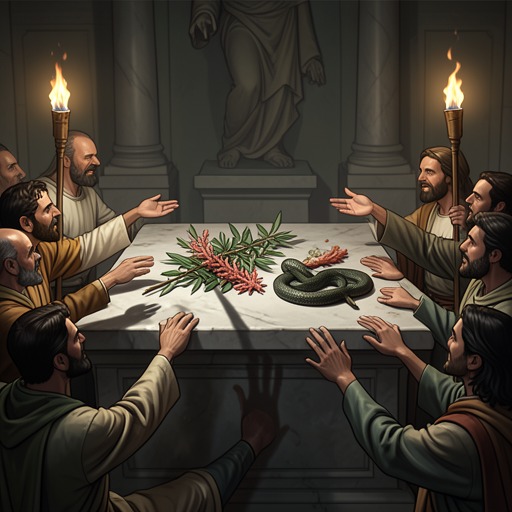
The Memnonides arise after Memnon’s body has been placed upon the funeral pile and the final duty owed by friends has been performed. As the pyre burns, its sooty ashes are carried upward by the air, gathering and thickening into a concentrated mass that darkens the cheerful day by intercepting the sun’s light. The transformation begins in the material residue of mourning itself: what should disperse as smoke instead condenses into a new bodily form.
The ashes then assume a shape animated by their own heat and fire. Their remaining energy gives them active life, and their lightness makes the emerging forms seem to fly even before they possess wings. The metamorphosis therefore preserves the physical history of the funeral: the birds are made from the substance of cremation, but the fire that consumed the dead also supplies the force that animates the new creatures. Death does not simply end in disappearance; it becomes the medium through which Memnon’s memory takes visible form.
Formation of the Flock
The first transformed creature becomes a real bird, beating against the moving air on wings of its own. It is immediately joined by a thousand sisters of the same kind, all newly formed from the same pyre. Their collective birth distinguishes the Memnonides from an isolated transformation. The ashes generate a community rather than a solitary survivor, and the flock gives grief a social scale: Memnon’s death is answered by a multitude that shares one origin and one commemorative purpose.
The birds’ first movement is already ceremonial. Three times the circling throng advances around the pyre, and three times the beating of their wings produces a whizzing accompaniment. On the fourth flight, the squadron divides, turning their emergence into an ordered sequence of approaches, circuits, and separation. Their formation resembles a rite performed around the dead, with repetition replacing spoken lament and coordinated motion replacing the ordinary gestures of mourners.
Identity and Memorial Function
The Memnonides take both their courage and their name from Memnon. Their identity is consequently genealogical and commemorative at once: they descend from his funeral ashes, but they also continue the qualities associated with the warrior whose tomb they surround. The birds’ courage is not presented as an abstract virtue. It is enacted through their repeated willingness to enter combat, so that the character of the dead soldier persists as conduct in the transformed creatures.
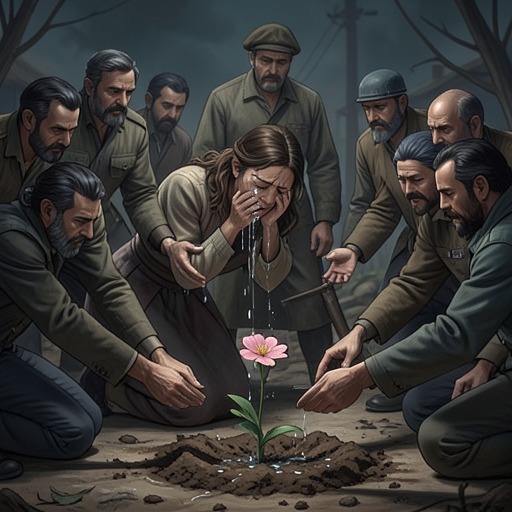
Their relation to Memnon is also expressed through sacrifice. The birds live for his sake and die for his sake, making their existence a continual exchange between survival and devotion. The flock does not overcome mourning by forgetting the dead; instead, it preserves mourning through a repeated readiness to suffer. Each bird’s death confirms the strength of the bond, while the flock’s continuation ensures that the memorial does not vanish with any single member.
Annual Battle at the Tomb
The most distinctive feature of the Memnonides is their punctual return. With every revolving year, the champion birds appear again in fresh array. Their recurrence is regular enough to seem calendrical: the memorial is not an exceptional response confined to the first funeral, but an event renewed according to the cycle of the year. Time thus becomes part of their identity, and the passage of years repeatedly reopens the scene of Memnon’s death.
When they return, the birds come prepared with vengeful minds to bleed in honor of the soldier’s tomb. Their annual encounter combines ritual, conflict, and tribute. They do not merely gather near the grave; they reenact violence around it, converting the tomb into both a memorial site and the center of a martial ceremony. The blood shed by the birds gives physical cost to remembrance, while the stated purpose of the combat keeps that violence directed toward honor for Memnon rather than toward an ordinary struggle for territory or survival.
Meaning of Repeated Mourning
The Memnonides make mourning durable by giving it a body, a rhythm, and a visible community. The funeral first produces the flock, the circling of the pyre establishes its ceremonial pattern, and the yearly return turns that pattern into tradition. Their metamorphosis therefore links private loss to collective memory: the dead warrior remains present not as a speaking figure, but through creatures that bear his name, reproduce his courage, and repeat their devotion at his tomb.
Their story also presents transformation as preservation rather than simple escape from death. Memnon’s body is destroyed by the funeral fire, yet the ashes retain enough identity to generate beings who act for him and are named from him. The resulting birds occupy an intermediate state between corpse, monument, and living descendants. They are products of destruction, but their recurrence prevents destruction from having the final word.
The flock’s annual combat gives this memorial logic an especially stark form. Memory is not passive recollection; it is an ordeal repeated until the dead remain bound to the living world. Each new array of birds renews the same allegiance, and each return to the tomb makes the past active again. Through the Memnonides, the narrative turns a funeral into an enduring institution of grief, where ashes become life and mourning becomes a yearly act of courage.